


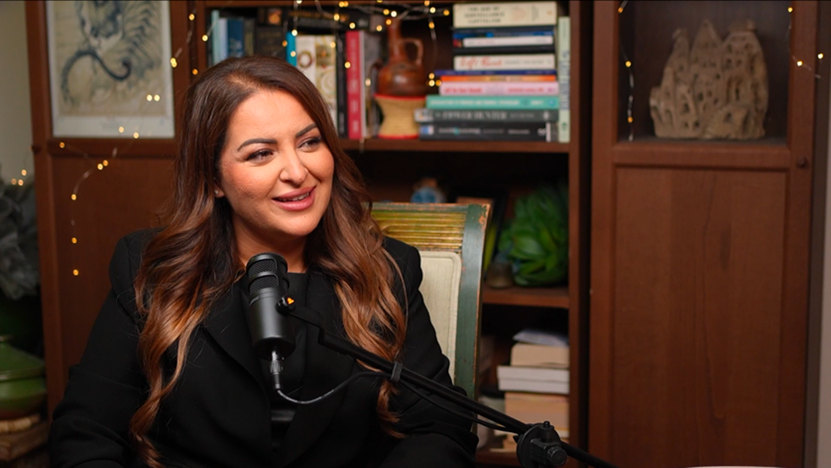
Founded under Saudi Arabia’s G20 presidency in 2020 and headquartered in Riyadh, the Digital Cooperation Organization DCO has rapidly emerged as a significant player in global tech governance. In this podcast, Dr. Hajar El Haddaoui, Director-General of the Digital Cooperation Organization (DCO) shares her journey and mission of founding the only multilateral body solely focused on enabling an inclusive digital economy that is serving over 800 million people across more than a dozen member countries. With extensive experience spanning telecom giants and international institutions, she has a unique blend of corporate strategy and international diplomacy to fulfill her mission to accelerate sustainable digital economy growth globally.
El Haddaoui’s career trajectory shaped her conviction that technology requires diplomatic coordination. From analyzing international markets at Swisscom, to strategic roles at Bell Canada and the United Nations, she witnessed firsthand how technical expertise and policy-making often operate in separate silos. “Diplomats are not tech-savvy, and tech people are not diplomat-savvy,” she explains, highlighting the communication gap that hampers effective digital policy. This observation led her to champion what she calls “tech diplomacy”, pairing digital experts with experienced diplomats and policymakers so governments and industry can speak a common language. Her approach emphasizes complete solutions rather than fragmented initiatives. “We don’t compete for a common cause,” she stresses. By fostering cooperation over competition, the DCO aims to accelerate digital progress while ensuring equitable access and benefits across all member states.
Building Digital Resilience
Resilience has emerged as a central theme in El Haddaoui’s vision for the digital future. In today’s hyper-connected world, outages or cyber-attacks anywhere can cascade globally, affecting critical services and economic activity. The digital divide isn’t just about who has access—it’s about building systems robust enough to withstand disruption. The recent mass blackout in Spain and Portugal, which left some 60 million people without power, serves as a stark reminder of infrastructure vulnerabilities. “That was a stark reminder that resilience isn’t optional; it’s the foundation,” El Haddaoui says. But resilience extends beyond physical infrastructure. The DCO’s network emphasizes that member nations must develop diversified economies capable of weathering technological disruptions. This means investing in multiple sectors, building redundancy into critical systems, and ensuring that economic prosperity doesn’t depend on single points of failure.
“Connectivity is really important,” El Haddaoui explains, “but bringing communities online requires not only cables and towers, but the right policies and innovations.” This holistic perspective acknowledges that infrastructure alone won’t deliver digital transformation’s full benefits without supportive regulatory frameworks, innovation ecosystems, and human capital development.
A Ten-Dimensional Approach
The DCO observes ten dimensions of the digital economy, moving far beyond simple connectivity metrics. These include broadband infrastructure, regulation, innovation, and skills development—all aimed at ensuring technology delivers prosperity in every community. This comprehensive framework recognizes critical interdependencies. For instance, deploying fiber-optic networks without training people to use digital tools leaves communities connected but not empowered. Similarly, encouraging tech entrepreneurship without appropriate regulations can create innovation vacuums or expose citizens to digital risks. El Haddaoui emphasizes that digital transformation is fundamentally about economic growth that translates into jobs and opportunity. The DCO positions itself as the bridge between technology industry leaders and government policymakers, facilitating conversations that might not otherwise happen and ensuring that policies support rather than hinder digital progress.
Closing the Digital Divide
Despite rapid technological advancement, an estimated one-third of the world remains offline—a vast digital divide with profound economic and social implications. For El Haddaoui, closing this gap requires more than infrastructure investment; it demands systemic thinking about how communities can genuinely benefit from connectivity. The DCO’s approach recognizes that different regions face different barriers. In some areas, the challenge is purely infrastructural, building the networks to reach remote populations. In others, affordability, digital literacy, or relevant content present bigger obstacles.
Effective solutions require understanding local contexts and tailoring interventions accordingly. As a woman leading a major international tech organization, El Haddaoui acknowledges the sector’s persistent gender gap while remaining pragmatic about solutions. “We need more women in tech roles, not just as a matter of fairness but because diverse perspectives drive better innovation,” she notes. The DCO actively promotes digital skills training programs targeting women and underrepresented groups across member states, recognizing that inclusive digital economies require diverse participation at all levels—from coding to leadership.
For El Haddaoui, the DCO’s mission transcends technical coordination. It’s about ensuring that digital transformation serves humanity’s broader interests: sustainable economic growth, social inclusion, and equitable opportunity. As digital technologies continue reshaping economies and societies, her tech diplomacy approach offers a blueprint for international cooperation on the defining challenges of our connected age, one where technical expertise and diplomatic skill must work hand in hand to build a digital future that works for everyone.