

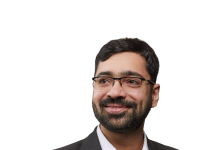








One of Egypt’s leading financial technology platforms, Money Fellows has surpassed 9 million users, including more than 1.2 million active customers, with the total value of its rotating savings and credit associations (ROSCAs) exceeding EGP 150 billion. Founder and CEO Ahmed Wadi highlighted how technology is transforming traditional savings systems, emphasising that solving real-world problems through innovation is essential to startup success and sustainable growth.
Wadi made these remarks during his participation in the “Entrepreneurs’ Pitches: From Idea to Growth” session at Egypt Forum 2026, held under the auspices of President Abdel Fattah El-Sisi from October 19 to 24 under the theme “A Look at Today, A Vision for Tomorrow.” The forum brought together Dr. Ahmed Rostom, Minister of Planning and Economic Development; Dr. Mohamed Farid Saleh, Minister of Investment and Foreign Trade; Mostafa Hassan, CEO of the Micro, Small and Medium Enterprise Development Agency (MSMEDA); Dr. Amr El-Abd, Prime Minister’s Adviser for Entrepreneurship Affairs; and entrepreneurs from various sectors.
Wadi explained that the idea behind establishing Money Fellows stemmed from his passion for finding solutions to everyday challenges and leveraging technology to deliver financial services that help people achieve their goals. He added that the company worked to modernize, organize, and simplify the traditional ROSCA model, making participation more accessible to millions of people with different financial capabilities and helping Money Fellows establish a leading position in the sector.
He noted that the Egyptian market offers significant growth opportunities in savings, pointing out that savings rates stand at approximately 28% of total income in Morocco and 30% in India, compared with less than 10% in Egypt. This, he said, reflects considerable potential for developing solutions that help individuals manage their savings and achieve their financial goals.
Wadi added that Money Fellows has successfully attracted more than $60 million in investments from sovereign wealth funds and international investors. He stressed that building a successful company starts with identifying a genuine problem affecting a significant number of people, then developing a viable business model that addresses it while generating returns to ensure the company’s sustainability.
Discussing the company’s journey, Wadi explained that when Money Fellows was established, there was no clear regulatory framework governing this type of business. He noted that the company’s participation in the regulatory sandbox for financial technology applications helped it launch its operations and develop its business model within a supervised regulatory environment.
He added that technological advancements and Egypt’s progress in digital transformation contributed to greater public awareness of digital services and financial technology, making financial services more accessible to citizens and supporting the company’s expansion and growth.
Wadi confirmed that Money Fellows spent approximately four years operating under the regulatory sandbox framework, explaining that the next stage requires transitioning to a licensing framework that will enable the company to continue expanding, attract additional investment, and reach a broader customer base.
For his part, Dr. Mohamed Farid Saleh, Minister of Investment and Foreign Trade, explained that regulatory sandboxes are designed for companies introducing innovative business models for which clear legal or regulatory frameworks may not yet exist. These sandboxes allow the effectiveness and viability of such models to be tested, helping authorities develop appropriate regulatory frameworks for their operations.
He noted that Money Fellows’ experience demonstrates the importance of these mechanisms in helping startups develop their businesses and navigate different stages of growth until they can operate under a regulatory framework suited to the nature of their activities.
Dr. Amr El-Abd, Prime Minister’s Adviser for Entrepreneurship Affairs, highlighted the importance of having digital infrastructure and services that support technology-driven companies. He explained that the development of the digital ecosystem increases startups’ chances of success and strengthens their ability to expand into Arab and African markets.
Reflecting on his entrepreneurial journey, Wadi explained that the success of any venture begins with believing in the idea and the impact it can have on people’s lives, rather than focusing solely on financial gains. He noted that his previous experiences, including his time in Germany, reinforced his conviction that entrepreneurs must identify a clear problem and build a practical business model to address it.
He stressed that the problem must be significant enough to justify building a company around it, while the proposed solution must continue to evolve to deliver genuine value to customers.
Wadi also offered advice to young people and students aspiring to enter the world of entrepreneurship, emphasizing that failure is an essential part of the learning process. He added that perseverance and testing ideas quickly help entrepreneurs better understand market needs and refine their businesses.